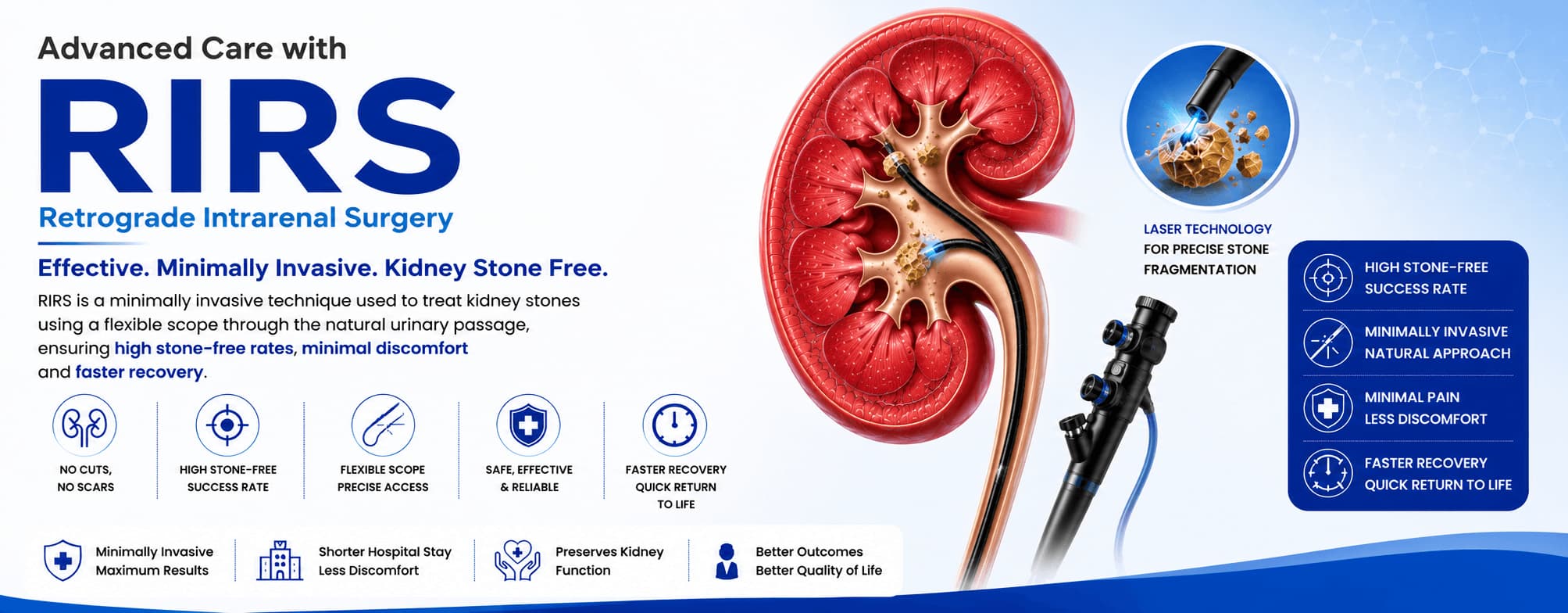
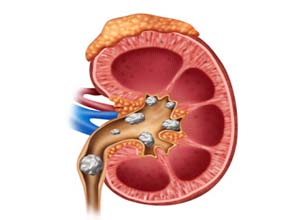
Retrograde Intrarenal Surgery (RIRS) is a highly advanced endoscopic procedure used to treat kidney stones without any external incision. A flexible fiber-optic endoscope is passed through the natural urinary passage into the kidney.
The stone is visualized directly and fragmented using a high-powered laser. The stone fragments are either removed or passed naturally through urine.
When is RIRS Recommended?
Kidney stones up to 2 cm
Lower pole kidney stones
Recurrent stone disease
Patients seeking scar-free treatment
Patients unsuitable for PCNL
Anatomically difficult kidneys
Advantages of RIRS
No incision
No scar
Minimal bleeding
Less pain
Short hospital stay
Quick recovery
Excellent stone clearance rates
Advanced Laser Technology
At Pramodini Urology Foundation, RIRS is performed using modern flexible ureteroscopes and advanced laser systems that allow precise stone fragmentation with maximum safety.
Recovery After RIRS
Most patients resume normal daily activities within a few days. Recovery is generally faster compared to traditional surgery, making RIRS one of the most preferred treatment options for selected kidney stone patients.
Why Choose Pramodini Urology Foundation?
Advanced endourology center
Thousands of successful stone surgeries
Expertise in PCNL, Mini-PCNL, Ultra-Mini PCNL, ESWL and RIRS
Modern laser stone treatment technology
Patient-centric care
Comprehensive diagnosis and follow-up
Advanced Laser Treatment for Kidney Stones
Discover minimally invasive laser treatment options for kidney stones.