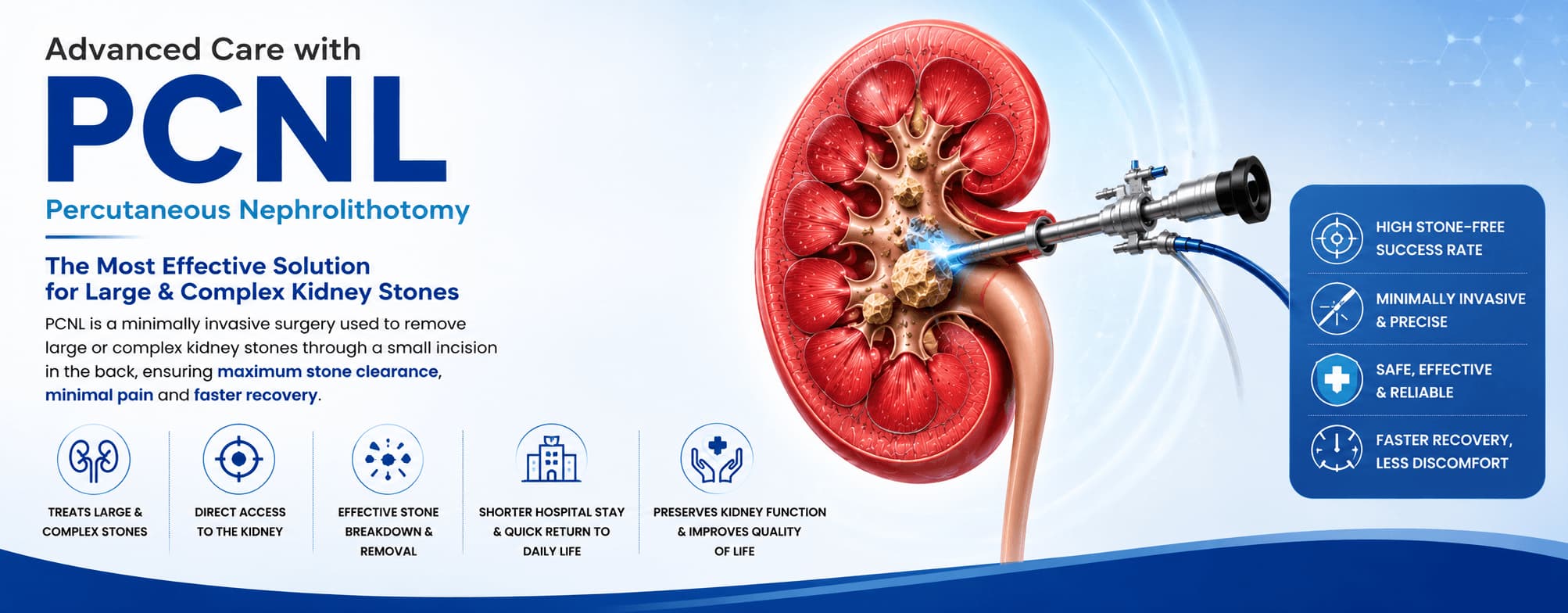
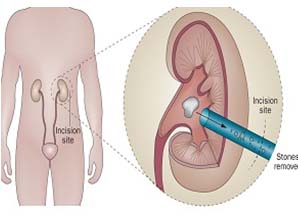
Percutaneous Nephrolithotomy (PCNL) is considered the gold standard treatment for large kidney stones, staghorn calculi, and complex stone disease. The procedure involves creating a small tract through the skin directly into the kidney to remove stones.
At Pramodini Urology Foundation, more than 5,000 PCNL procedures have been successfully performed, making it one of the leading centers for endourology and kidney stone management.
Who Needs PCNL?
Large kidney stones (>2 cm)
Staghorn stones
Multiple kidney stones
Hard stones resistant to ESWL
Recurrent stone disease
Complex renal calculi
Our Experience
The foundation has successfully treated patients ranging from 1 year to 87 years of age with stones varying from 1 cm to 10 cm in size. Advanced Richard Wolf nephroscopes and modern endourological equipment help achieve excellent stone clearance rates.
Benefits of PCNL
High stone-free rates
Effective for very large stones
Minimally invasive
Reduced postoperative pain
Shorter recovery period
Better outcomes than open surgery
Advanced Stone Management
Apart from standard PCNL, our center performs:
Mini-PCNL
Ultra-Mini PCNL
Laser Stone Surgery
Flexible Ureteroscopy
RIRS
This comprehensive approach allows personalized treatment based on stone size, location, and patient factors.
Expert Care for Large Kidney Stones
Explore surgical options for removing large or complex kidney stones.