

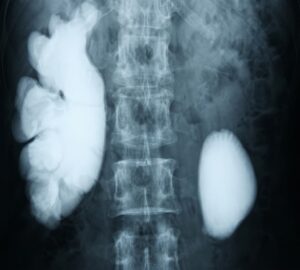
 A kidney stone, also known as a renal calculus or nephrolith, is a solid piece of material which is formed in the kidneys from minerals in urine.Kidney stones typically leave the body in the urine stream, and a small stone may pass without causing symptoms.If stones grow to sufficient size (usually at least 3 millimeters (0.1 in)) they can cause blockage of the ureter. This leads to pain, most commonly beginning in the flank or lower back and often radiating to the groin. This pain is often known as renal colic.
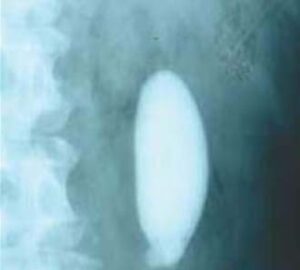
Staghorn calculi, also sometimes called coral calculi, are renal calculi that obtain their characteristic shape by forming a cast of the renal pelvis and calyces, thus resembling the horns of a stag.
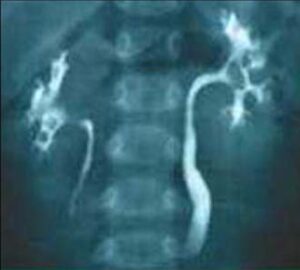
Extracorporeal shock wave lithotripsy (ESWL) is a non-invasive treatment of kidney stones (urinary calculosis) and biliary calculi (stones in the gallbladder or in the liver) using an acoustic pulse. It is also reported to be used for salivary stones.
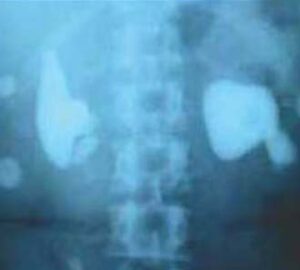
The image shows a large bilateral staghorn renal stones, single sitting bilateral with a total clearance.
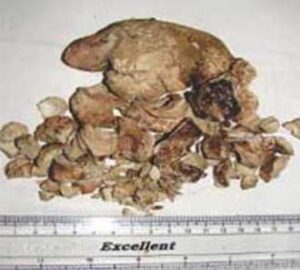
Once the stones are located, they are targeted with a laser that breaks the stone into smaller pieces, which are then extracted, or into tiny pieces of dust that wash out of the kidney with normal urine flow. Often, a small tube, called a stent, will be placed temporarily to help the kidney drain after the operation.
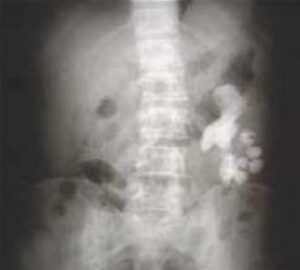
The image shows a Staghorn Stone cleared by PCNL
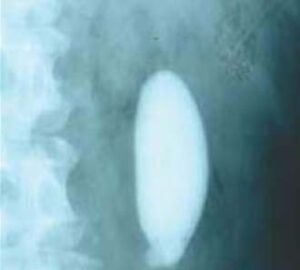
The image shows left large renal stone cleared by PCNL.